Figuring Racism in Medieval Christianity by M. Lindsay Kaplan
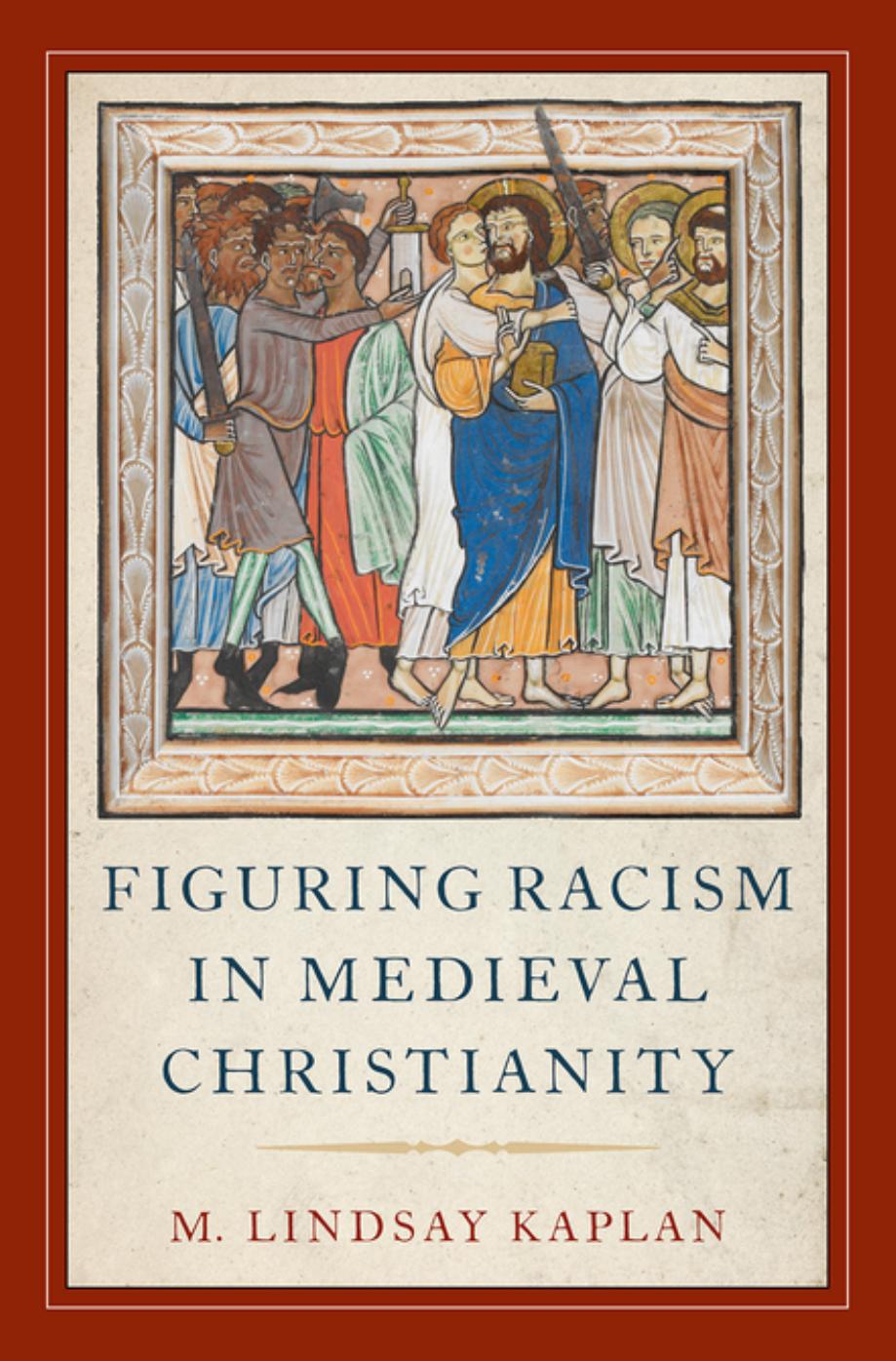
Author:M. Lindsay Kaplan
Language: eng
Format: epub, pdf
Publisher: Oxford University Press
Published: 2018-10-18T16:00:00+00:00
Perpetual Servitude in Africa
The canon law discussions of the Church’s authority over infidel lands and persons influenced later debates on the legality of the acquisition of the territories and bodies of African unbelievers.30 In the early fifteenth century, King Duarte of Portugal (r. 1433–1438) asked Pope Eugenius IV for permission to expand control over islands held by infidels in the Canaries; only the pope, who has authority over infidels, could deputize secular rulers to act on his behalf. The king based his request on the grounds that the Portuguese would occupy these lands for the purpose of converting the non-Christian inhabitants (Muldoon 1976, 468–71). A contemporary summary of the king’s request puts it more in terms of war than conversion and misrepresents the Canarians as Muslim: “A certain Catholic prince or King who recognizes no superior wishes to wage war against the Saracens” (Muldoon 1976, 472). Eugenius consulted two canon lawyers to answer this question; both rely on the opinion of Innocent IV to address the issues of the legitimate dominium (rule) of infidels and the grounds upon which Christians could deprive them of it. Although the inhabitants of the Canaries are pagans, both canonists assume they are Muslim, which enables the lawyers to draw from existing opinions regarding infidels, developed with recourse to Jews and Muslims, and papal authority.
One of the lawyers, Antonio Roselli, followed Innocent’s discussion of papal power as stated in the commentary to Quod super his, to explain how the “Saracen” Canarians are subject to the pope. Roselli iterates Innocent’s claim that because all people are subject to God’s divine power, therefore His representative, the pope, has authority over non-Christians in addition to his role as shepherd over Christ’s flock (Muldoon 1979, 127; 1976, 475). Roselli initially draws, as Innocent does, on Psalm 8:8, to argue that although gentiles and pagans are not sheep of the Church, they are nevertheless Christ’s sheep by virtue of creation. In his paraphrase of Scripture he asserts “All, indeed, were subject to Christ, sheep and cows and all the cattle of the field.”31 Relying on the Psalm text, however, he alters this initial statement that all peoples are sheep, to draw a distinction between the faithful and unbelievers. He explains that the sheep represent Christians, while the cows and cattle signify “Saracens who, devoid of reason, just as beasts, worship idols, scorning the true God. Even if these in this way were not commended to the shepherd Peter by Jesus, they are therefore nevertheless subjected to divine rule and power beneath the feet of Peter” (my translation, qtd. in Muldoon 1976, 475).32 While the proof-text serves to show the similarity between sheep and cattle, insofar as both are subject to divine law as adjudicated by the pope, Roselli employs it to create a hierarchy between the two groups. In distinguishing between the Christian sheep and the Muslim cattle, the sheep are preferred to the bestial cattle, which lack reason. He may be recalling discourses like Peter of Cluny’s that identify
Download
Figuring Racism in Medieval Christianity by M. Lindsay Kaplan.pdf
This site does not store any files on its server. We only index and link to content provided by other sites. Please contact the content providers to delete copyright contents if any and email us, we'll remove relevant links or contents immediately.
| General | Discrimination & Racism |
Nudge - Improving Decisions about Health, Wealth, and Happiness by Thaler Sunstein(7689)
The Fire Next Time by James Baldwin(5422)
iGen by Jean M. Twenge(5403)
Adulting by Kelly Williams Brown(4562)
The Sports Rules Book by Human Kinetics(4377)
The Hacking of the American Mind by Robert H. Lustig(4368)
The Ethical Slut by Janet W. Hardy(4239)
Captivate by Vanessa Van Edwards(3835)
Mummy Knew by Lisa James(3682)
In a Sunburned Country by Bill Bryson(3528)
The Worm at the Core by Sheldon Solomon(3483)
Ants Among Elephants by Sujatha Gidla(3458)
The 48 laws of power by Robert Greene & Joost Elffers(3220)
Suicide: A Study in Sociology by Emile Durkheim(3011)
The Slow Fix: Solve Problems, Work Smarter, and Live Better In a World Addicted to Speed by Carl Honore(3001)
The Tipping Point by Malcolm Gladwell(2908)
Humans of New York by Brandon Stanton(2864)
Handbook of Forensic Sociology and Psychology by Stephen J. Morewitz & Mark L. Goldstein(2691)
The Happy Hooker by Xaviera Hollander(2683)
